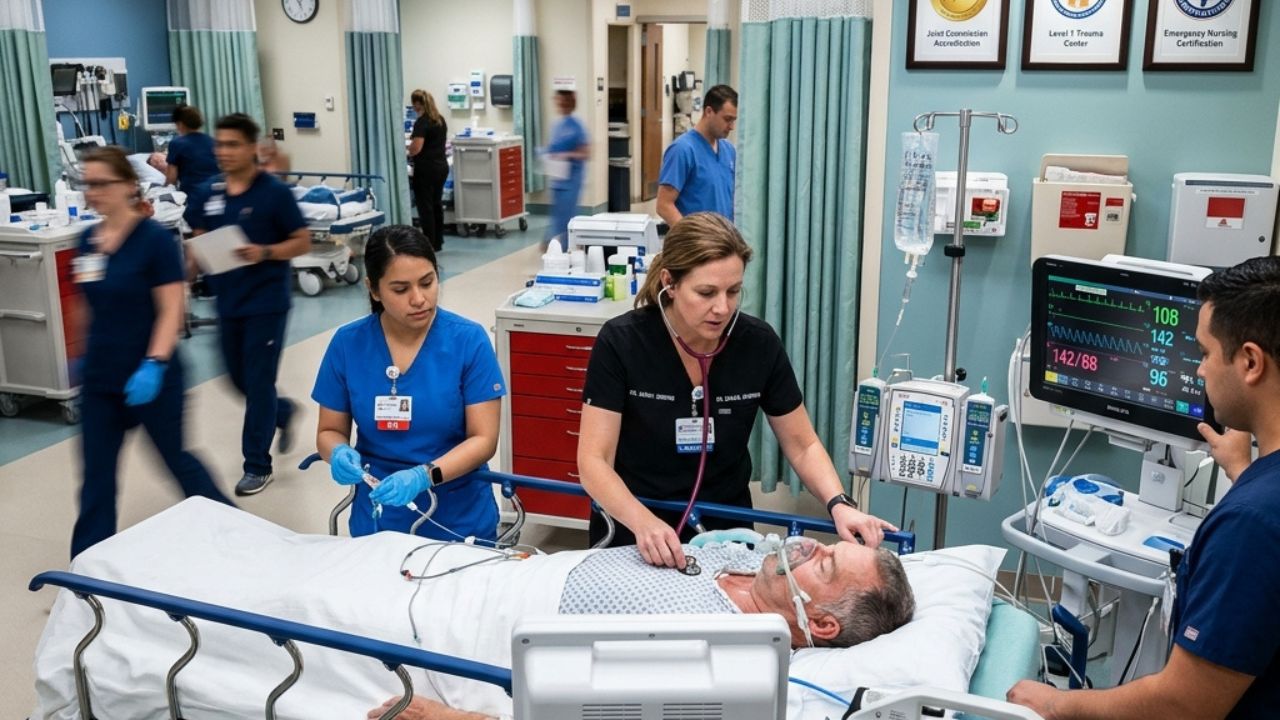
High-quality emergency services are defined by rapid response times, board-certified trauma specialists, advanced diagnostic technology, and verified accreditations. Hospitals like Mayo Clinic, Johns Hopkins, and Massachusetts General consistently lead national rankings for emergency care due to their specialized staff, infrastructure, and patient outcomes.
Every second counts in a medical emergency. A blocked artery, a traumatic injury, a sudden neurological event—these situations leave little room for deliberation. The hospital you choose, or the one you’re transported to, can determine whether a patient makes a full recovery or faces lasting consequences.
Yet most people give little thought to emergency care until they need it. Unlike scheduled procedures, emergencies don’t allow time for research. That’s why understanding what separates an exceptional emergency department from an average one—before a crisis strikes—is one of the most practical steps you can take for your health and your family’s.
This guide breaks down what genuinely defines high-quality emergency services, the key metrics and accreditations to look for, and which hospitals in the United States consistently set the standard for emergency care.
What Constitutes High-Quality Emergency Services?
Not all emergency departments are built the same. A high-quality emergency department goes well beyond having an ER sign on the door. The distinction lies in four core areas: clinical capability, staffing expertise, diagnostic technology, and patient experience metrics.
Advanced Trauma Care Capabilities and Specialized Staff
The foundation of any great emergency department is its people. Top-tier facilities staff their emergency departments with board-certified emergency medicine physicians around the clock—not residents or general practitioners filling gaps. In trauma-designated centers, this also means immediate access to trauma surgeons, neurosurgeons, cardiologists, and orthopedic specialists.
The American College of Surgeons (ACS) designates trauma centers across four levels, with Level I being the most comprehensive. A Level I Trauma Center must provide 24-hour in-house coverage by general surgeons and immediate access to care across a range of specialties. According to the ACS, patients treated at Level I Trauma Centers have a 25% higher survival rate for severe injuries compared to non-trauma centers.
State-of-the-Art Diagnostic Equipment and Technology
Speed and accuracy in diagnosis directly affect patient outcomes. Leading emergency departments invest heavily in on-site imaging—CT scanners, MRI machines, digital X-ray, and point-of-care ultrasound—that can be accessed within minutes rather than hours. Many top hospitals now use AI-assisted imaging software to flag anomalies like pulmonary embolisms or brain bleeds faster than traditional review processes.
Integrated electronic health records (EHR) also play a role. When a patient arrives unconscious, a fully integrated EHR system allows ER staff to instantly access medication histories, allergies, and prior diagnoses—eliminating dangerous guesswork.
Average Wait Times and Patient Satisfaction Metrics
The Centers for Medicare and Medicaid Services (CMS) publicly reports emergency department wait time data through its Hospital Compare platform. Nationally, the median time from arrival to being seen by a physician is approximately 24 minutes, but at high-performing hospitals, this figure drops significantly.
Patient satisfaction scores—collected through the Hospital Consumer Assessment of Healthcare Providers and Systems (HCAHPS) survey—offer another layer of insight. These scores reflect how clearly staff communicated, how well pain was managed, and how safe patients felt throughout their visit. While satisfaction isn’t a substitute for clinical outcomes, it correlates strongly with care quality and coordination.
Accreditations and Certifications That Signal Excellence
When evaluating emergency departments, accreditation is one of the most reliable external indicators of quality. Key certifications include:
- Joint Commission Accreditation: The gold standard for hospital accreditation in the U.S., signaling that a facility meets rigorous performance standards across patient safety and care quality.
- ACS Trauma Center Designation: Particularly important for hospitals serving high-risk populations or located in areas prone to accidents and disasters.
- Chest Pain Center Accreditation: Awarded by the American College of Cardiology to hospitals with dedicated protocols for rapid cardiac care.
- Comprehensive Stroke Center Certification: Granted to facilities with advanced stroke treatment capabilities, including 24/7 access to neurosurgery and interventional radiology.
Hospitals that hold multiple accreditations across these categories signal a consistent, institution-wide commitment to emergency care standards.
Top U.S. Hospitals Known for High-Quality Emergency Services
Mayo Clinic — Rochester, Minnesota
Mayo Clinic consistently ranks among the top hospitals in the United States, earning the No. 1 spot in U.S. News & World Report’s Best Hospitals rankings for multiple consecutive years. Its emergency department benefits from the institution’s integrated care model, where specialists across disciplines collaborate in real time. Mayo operates a Level I Trauma Center and holds Joint Commission accreditation, with particularly strong outcomes in cardiac and neurological emergencies.
What sets Mayo Clinic apart is its infrastructure. The hospital’s Rochester campus operates one of the most advanced diagnostic imaging networks in the country, with results frequently available within minutes of a scan being ordered.
Johns Hopkins Hospital — Baltimore, Maryland
Johns Hopkins Hospital has been a cornerstone of American medicine for over a century. Its emergency department handles more than 90,000 visits annually and is supported by one of the nation’s leading academic medical programs. The hospital is a verified Level I Trauma Center and holds comprehensive stroke center certification.
Johns Hopkins is also notable for its investment in emergency medicine research. Clinical protocols developed at Johns Hopkins—including early sepsis detection algorithms—have been adopted by hospitals across the country, demonstrating its influence beyond its own walls.
Massachusetts General Hospital — Boston, Massachusetts
Massachusetts General Hospital (MGH) combines academic research with frontline emergency care in a way few institutions can match. Its emergency department treats over 100,000 patients per year and operates as a Level I Trauma Center. MGH holds Joint Commission Gold Seal of Approval accreditation and has earned top marks in patient satisfaction from CMS.
MGH’s strength lies in its rapid access to subspecialty care. A patient presenting with a complex cardiac event, for instance, can be moved from the ER to an interventional cardiology suite within minutes—a capability that depends on hospital-wide coordination that takes years to develop.
Cedars-Sinai Medical Center — Los Angeles, California
Cedars-Sinai is widely regarded as one of the leading hospitals on the West Coast, particularly for cardiac and neurological emergencies. The medical center’s emergency department serves a large and diverse urban population, operating 24/7 with board-certified specialists across every major discipline.
Cedars-Sinai holds Comprehensive Stroke Center certification and Chest Pain Center accreditation, making it one of a relatively small number of U.S. hospitals certified in both. Its investment in real-time data analytics allows care teams to anticipate patient needs before they escalate.
Cleveland Clinic — Cleveland, Ohio
Cleveland Clinic’s emergency department is part of an institution that U.S. News & World Report has consistently ranked among the top three hospitals in the country. The Clinic’s Heart, Vascular & Thoracic Institute is world-renowned, and that expertise flows directly into its emergency cardiac care protocols.
For patients experiencing heart attacks, Cleveland Clinic’s average door-to-balloon time—the interval between a patient’s arrival and the opening of a blocked coronary artery—consistently outperforms the national benchmark of 90 minutes. That single metric saves lives.
How to Evaluate Your Local Emergency Department
National rankings are a useful reference, but geography is a real constraint. In an acute emergency, the closest hospital often becomes the most important one. Here’s how to assess what’s available near you:
- Check CMS Hospital Compare: Visit medicare.gov/care-compare to review wait times, patient satisfaction scores, and safety ratings for hospitals in your area.
- Look for trauma center designation: The ACS maintains a searchable database of verified trauma centers by state and level.
- Ask about stroke and cardiac protocols: Call your local hospital’s patient services line and ask whether they hold Comprehensive Stroke Center or Chest Pain Center certification.
- Review your insurance network: Knowing which hospitals are in-network before an emergency prevents compounding a health crisis with a financial one.
What to Do Right Now to Prepare for a Medical Emergency
Preparation is the only thing that bridges the gap between an emergency happening and the right care being delivered. A few practical steps can make a significant difference:
- Identify your nearest Level I or Level II Trauma Center and save the address in your phone.
- Keep a medical summary card in your wallet with key information: blood type, current medications, allergies, and emergency contacts.
- Know the signs of heart attacks, strokes, and sepsis—conditions where early recognition dramatically improves outcomes.
- Discuss your preferences with family members, including whether you have an advance directive or healthcare proxy in place.
The Right Hospital Changes Everything
Emergency medicine has advanced remarkably over the past two decades. Survival rates for cardiac arrest, stroke, and traumatic injury have improved significantly at hospitals that invest in specialized staff, technology, and evidence-based protocols. The gap between a high-performing emergency department and an average one is measurable—in wait times, in survival rates, and in long-term patient outcomes.
The hospitals featured here—Mayo Clinic, Johns Hopkins, Massachusetts General, Cedars-Sinai, and Cleveland Clinic—represent what exceptional emergency care looks like at scale. They are not the only great options, but they exemplify the standards worth looking for wherever you live.
Use the criteria in this guide to evaluate your local options. Share it with the people you care about. The best time to think about emergency care is well before you need it.
Frequently Asked Questions
What is a Level I Trauma Center, and why does it matter?
A Level I Trauma Center is the highest designation awarded by the American College of Surgeons. It requires 24-hour in-house coverage by general surgeons, immediate access to a full range of specialists, and a minimum annual volume of severely injured patients. Patients treated at Level I centers have a 25% higher survival rate for severe injuries compared to non-designated hospitals, according to the ACS.
How do I find out how long the wait time is at my local emergency room?
The Centers for Medicare and Medicaid Services publishes emergency department wait time data through its Hospital Compare tool at medicare.gov/care-compare. You can search by hospital name or location to compare median wait times across facilities in your area.
What accreditations should I look for when evaluating an emergency department?
Look for Joint Commission accreditation, ACS Trauma Center designation, Chest Pain Center accreditation from the American College of Cardiology, and Comprehensive Stroke Center certification. Hospitals that hold multiple certifications have demonstrated sustained compliance across multiple clinical standards.
Is the nearest hospital always the best choice in an emergency?
For life-threatening emergencies involving trauma, stroke, or cardiac arrest, transport time matters—but so does capability. Emergency medical services (EMS) teams are trained to bypass the nearest facility if a higher-level trauma or specialty center is within a clinically acceptable distance. If you are driving yourself or a family member, default to the nearest emergency department and let clinical staff assess whether transfer is needed.
How are hospital patient satisfaction scores measured?
Patient satisfaction in U.S. hospitals is measured through the HCAHPS (Hospital Consumer Assessment of Healthcare Providers and Systems) survey, administered after discharge. The survey covers communication with doctors and nurses, responsiveness of hospital staff, pain management, and overall hospital rating. Results are publicly reported by CMS.