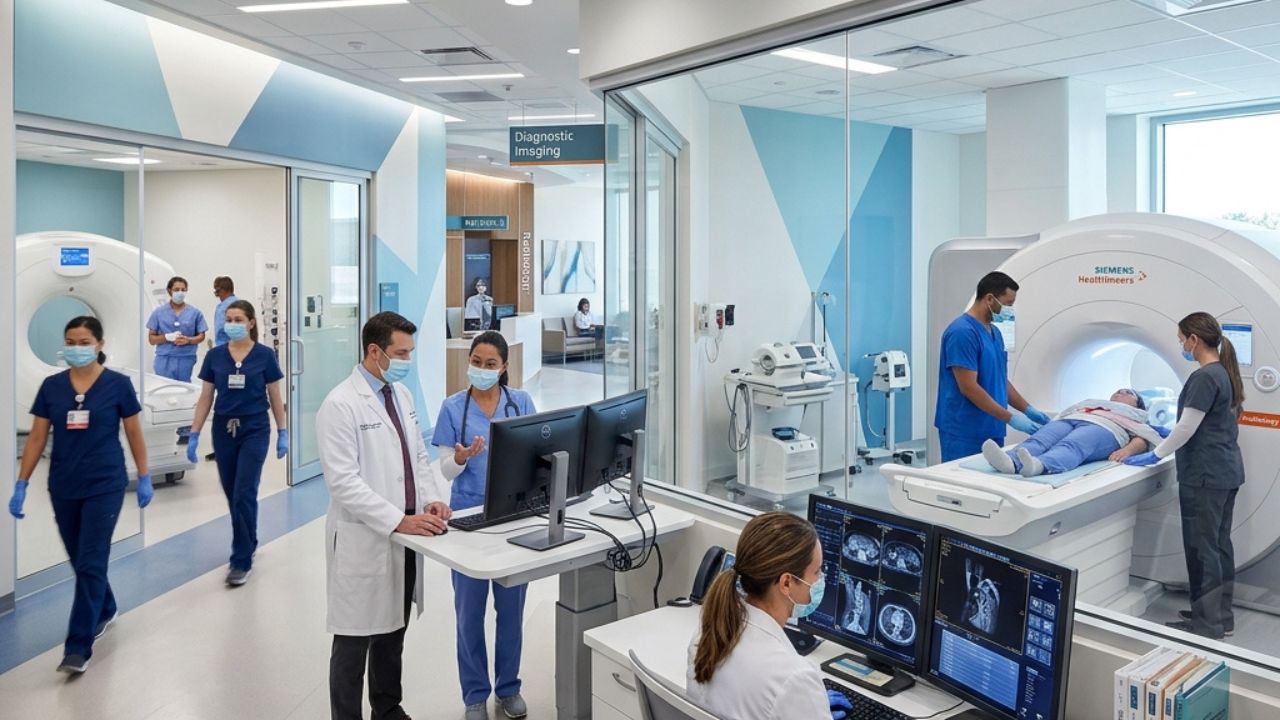
The best hospitals for complex medical diagnoses combine cutting-edge diagnostic technology, specialized multidisciplinary teams, and strong research capabilities. Top institutions include Mayo Clinic, Johns Hopkins, Cleveland Clinic, Massachusetts General Hospital, and UCSF Medical Center—each offering world-class expertise across a range of difficult-to-diagnose and rare conditions.
A complex medical diagnosis changes everything. The moment a doctor says “we’re not sure yet” or presents a rare, multifaceted condition, the stakes of choosing the right hospital rise dramatically. Where you receive care can determine how quickly you get answers, what treatment options are available to you, and ultimately, what your prognosis looks like.
Not all hospitals are equipped to handle complex cases. Diagnosing and treating rare diseases, cancer, neurological disorders, or multi-system conditions requires more than standard medical infrastructure. It demands specialized teams, advanced diagnostic tools, access to clinical research, and a culture of collaboration across departments. The difference between a general community hospital and a top-tier academic medical center can be the difference between months of uncertainty and a clear, actionable diagnosis.
This guide breaks down what separates the best hospitals for complex medical diagnoses from the rest, highlights five of the top institutions in the United States, and gives you a practical framework for choosing the right facility for your specific situation.
What Makes a Hospital Excellent for Complex Cases?
State-of-the-Art Diagnostic Technology and Equipment
Advanced diagnostics form the foundation of accurate, timely answers for complex conditions. Top hospitals invest heavily in next-generation imaging systems—such as 3T and 7T MRI machines, PET-CT scanners, and AI-assisted radiology tools—that can detect abnormalities earlier and with greater precision than standard equipment.
Genomic sequencing capabilities are equally important. For conditions with a possible genetic component—certain cancers, rare metabolic disorders, hereditary syndromes—whole-genome or whole-exome sequencing can unlock diagnostic clarity that conventional testing misses entirely. Hospitals at the forefront of complex care typically offer these services in-house, reducing the time patients spend waiting for answers.
Specialized Medical Teams and Multidisciplinary Approach
Complex diagnoses rarely fall neatly into one specialty. A patient presenting with unexplained organ failure, treatment-resistant cancer, or a rare autoimmune condition often requires the combined expertise of internists, radiologists, pathologists, geneticists, and subspecialists working together.
The best hospitals organize this through multidisciplinary tumor boards, rare disease clinics, and integrated care teams that meet regularly to review complex cases. This structure reduces diagnostic error, accelerates decision-making, and ensures that no single specialist’s blind spots determine the outcome.
Research Capabilities and Clinical Trial Access
Academic medical centers affiliated with major research universities are uniquely positioned to offer clinical trial access. For patients with rare or treatment-resistant conditions, participating in a clinical trial may be the only pathway to cutting-edge therapies not yet available to the broader public.
According to the National Institutes of Health (NIH), clinical trial participants often gain access to investigational treatments years before they reach standard care. Hospitals that run active research programs—and maintain strong affiliations with the NIH, National Cancer Institute (NCI), or similar bodies—offer a measurable advantage for complex cases.
Patient Outcomes and Survival Rates Data
Quantitative outcomes data is one of the most reliable signals of a hospital’s capability. Look for institutions that publish condition-specific survival rates, complication rates, and readmission data. The U.S. News & World Report Best Hospitals rankings, the Leapfrog Hospital Safety Grade, and CMS’s Hospital Compare tool are all publicly accessible resources that aggregate this type of data.
Hospitals that perform well across multiple specialty rankings—cardiology, oncology, neurology, gastroenterology—tend to have the systemic infrastructure needed to manage complex, multisystem cases.
Accreditation and Quality Certifications
Accreditation from bodies like The Joint Commission, the Commission on Cancer (CoC), and the National Cancer Institute’s Cancer Center designation signals that a hospital has met rigorous standards for quality, safety, and patient care. For rare and complex conditions, specialty accreditations—such as National Comprehensive Cancer Network (NCCN) membership or recognition from the National Organization for Rare Disorders (NORD)—carry particular weight.
Top Hospitals for Complex Medical Diagnoses
1. Mayo Clinic — Rochester, Minnesota
Consistently ranked among the top hospitals in the United States by U.S. News & World Report, Mayo Clinic is widely regarded as a gold standard for complex and undiagnosed conditions. Its Undiagnosed Diseases Program works specifically with patients who have exhausted other diagnostic pathways, applying advanced genomic and proteomic testing alongside expert multidisciplinary review.
Mayo Clinic’s integrated model—where physicians across all specialties work under one coordinated system—means that a patient can see multiple specialists in a single visit. Key areas of strength include oncology, neurology, cardiology, and rare disease diagnosis. The clinic sees approximately 1.3 million patients annually and runs hundreds of active clinical trials at any given time.
2. Johns Hopkins Hospital — Baltimore, Maryland
Johns Hopkins Hospital has ranked #1 in the U.S. News & World Report Best Hospitals list for more than two decades across its history. Its diagnostic capabilities span virtually every specialty, with particular depth in neurology, neurosurgery, oncology, and rheumatology.
Johns Hopkins Medicine operates the Undiagnosed Diseases Network (UDN) Clinical Site, a federally funded initiative connecting patients with rare or mysterious conditions to expert teams and advanced diagnostic tools. The hospital’s pathology and genomics laboratories are among the most sophisticated in the country, offering detailed molecular diagnostics for complex malignancies and genetic conditions.
3. Cleveland Clinic — Cleveland, Ohio
Cleveland Clinic is internationally recognized for cardiovascular care—its Heart, Vascular & Thoracic Institute has ranked #1 in the nation for cardiology and cardiac surgery by U.S. News & World Report for 30 consecutive years as of 2024. Beyond cardiology, the clinic offers exceptional depth in gastroenterology, urology, neurology, and orthopedics.
Cleveland Clinic’s Center for Personalized Genetic Healthcare offers comprehensive genetic counseling and testing, making it a strong destination for patients navigating inherited conditions. With a global network of satellite campuses and a strong telemedicine infrastructure, patients outside Ohio can access Cleveland Clinic specialists remotely before deciding whether to travel for in-person care.
4. Massachusetts General Hospital — Boston, Massachusetts
As Harvard Medical School’s primary teaching hospital, Massachusetts General Hospital (MGH) operates at the intersection of clinical excellence and pioneering research. MGH runs one of the largest hospital-based research programs in the United States, generating more than $1 billion in annual research funding.
MGH’s Rare Disease Unit and its multidisciplinary cancer centers are particularly well-equipped for cases that have defied diagnosis elsewhere. The hospital’s Lurie Center for Autism and its Center for Genomic Medicine are notable resources for patients with complex neurological or developmental conditions. MGH consistently ranks in the top five of U.S. News & World Report’s Honor Roll of Best Hospitals.
5. UCSF Medical Center — San Francisco, California
The University of California, San Francisco (UCSF) Medical Center is a top-ranked academic medical center with exceptional strength in oncology, neurology, and transplant medicine. UCSF’s Helen Diller Family Comprehensive Cancer Center holds NCI designation and is recognized as one of the nation’s leading cancer research institutions.
UCSF stands out for its Precision Medicine program, which uses molecular profiling of tumors and rare diseases to tailor treatment plans to the individual patient’s biology. For patients in the western United States, UCSF offers a geographically accessible alternative to East Coast institutions without sacrificing diagnostic depth or research access.
How to Choose the Right Hospital for Your Needs
How Should You Research Hospital Rankings and Accreditations?
Start with U.S. News & World Report’s Best Hospitals rankings, which evaluate more than 4,500 hospitals across 15 adult specialties. Filter by the specialty most relevant to your condition. Cross-reference with Leapfrog Hospital Safety Grades and CMS Hospital Compare data to build a complete picture of quality and safety.
For cancer diagnoses specifically, look for NCI-designated Cancer Centers—there are 72 across the country, each meeting rigorous standards for research and clinical care.
How Can You Verify a Specialist’s Expertise in Your Specific Condition?
Volume matters enormously in complex medicine. Surgeons and specialists who perform a particular procedure or manage a particular condition frequently achieve better outcomes than those who encounter it rarely. Ask prospective hospitals how many cases of your specific condition they manage each year, and whether they have a dedicated team or clinic for it.
Board certifications, subspecialty fellowships, and peer-reviewed publications in your condition’s area are additional markers of depth.
What Are the Financial Considerations When Choosing a Specialty Hospital?
Top academic medical centers often fall within the highest hospital tiers for insurance purposes, which can mean significantly higher out-of-pocket costs. Before committing to a hospital, verify your insurance network status and request a pre-authorization for the specific services you’ll need.
Many top hospitals have financial counselors and patient assistance programs for out-of-network or uninsured patients. Mayo Clinic, Cleveland Clinic, and Johns Hopkins all offer dedicated financial navigation services.
When Does Location or Travel Become a Deciding Factor?
For a one-time diagnostic evaluation, traveling to a top-ranked institution is often worth the investment—particularly when local hospitals have been unable to provide a diagnosis or a clear treatment plan. However, if ongoing treatment is required, proximity to home becomes a more significant consideration for quality of life, caregiver support, and cost.
Telemedicine consultations have expanded access meaningfully. Many of the hospitals listed above offer virtual second opinions, allowing patients to receive expert review of imaging, pathology, and records before deciding whether to travel.
Questions to Ask When Selecting a Hospital
Choosing a hospital for a complex diagnosis is a high-stakes decision. These questions will help you gather the information you need:
- What is your experience with my specific diagnosis? Ask for case volume data, not just a general affirmation of capability.
- What treatment options do you offer? Understand whether the hospital takes a conservative or aggressive approach, and what alternatives exist if first-line treatment fails.
- What are your patient outcomes and survival rates for this condition? Reputable institutions should be able to provide this data or direct you to where it is published.
- Do you participate in clinical trials relevant to my diagnosis? If so, ask whether you may be eligible and what the enrollment process involves.
- What support services are available for patients and families? Consider social work, financial counseling, mental health services, and patient navigator programs—especially for long-term or complex treatment journeys.
Finding the Right Care for a Complex Diagnosis
A difficult diagnosis demands the right environment to unravel it. The hospitals outlined in this guide—Mayo Clinic, Johns Hopkins, Cleveland Clinic, Massachusetts General Hospital, and UCSF Medical Center—represent the upper tier of complex diagnostic care in the United States. Each offers a combination of advanced technology, collaborative specialist teams, and research depth that sets them apart.
But the “best” hospital is ultimately the one best suited to your specific condition, location, insurance situation, and personal priorities. Use the criteria and questions in this guide as your framework. Seek second opinions freely—top institutions encourage them. And wherever possible, connect with patient advocacy organizations for your specific condition; they often maintain condition-specific hospital referral networks that can point you toward the most experienced teams in the country.
Your diagnosis may be complex. Your path to answers doesn’t have to be.
Frequently Asked Questions
What types of conditions require a specialized hospital for diagnosis?
Complex conditions include rare genetic disorders, undiagnosed diseases, treatment-resistant cancers, multisystem autoimmune diseases, and rare neurological conditions. These cases often require multidisciplinary teams, advanced genomic testing, and access to clinical trials that are not available at standard community hospitals.
How do I get a referral to a top hospital like Mayo Clinic or Johns Hopkins?
In most cases, you can self-refer to academic medical centers without a physician referral, though your primary care doctor or specialist can facilitate the process. Contact the hospital’s appointment office directly and request an evaluation. Many top hospitals also offer remote second-opinion services that begin with a review of your existing records.
Are clinical trials at top hospitals available to all patients?
Clinical trial eligibility varies by condition, disease stage, prior treatment history, and other medical factors. Contact the hospital’s clinical trials office or visit ClinicalTrials.gov to search for trials relevant to your diagnosis and check eligibility criteria.
How much does care at a top-ranked hospital cost compared to a local hospital?
Costs vary significantly based on insurance coverage, specific services needed, and whether the hospital is in-network. Out-of-pocket costs at academic medical centers can be higher, but most offer financial assistance programs. A pre-authorization request to your insurer and a conversation with the hospital’s financial counseling team can clarify costs before you commit.
What is a multidisciplinary care team and why does it matter for complex diagnoses?
A multidisciplinary care team brings together specialists from different medical fields—such as oncology, radiology, pathology, genetics, and surgery—to review a patient’s case collaboratively. This approach reduces the risk of missed diagnoses, speeds up decision-making, and ensures treatment plans reflect the full picture of a patient’s condition rather than one specialist’s perspective.