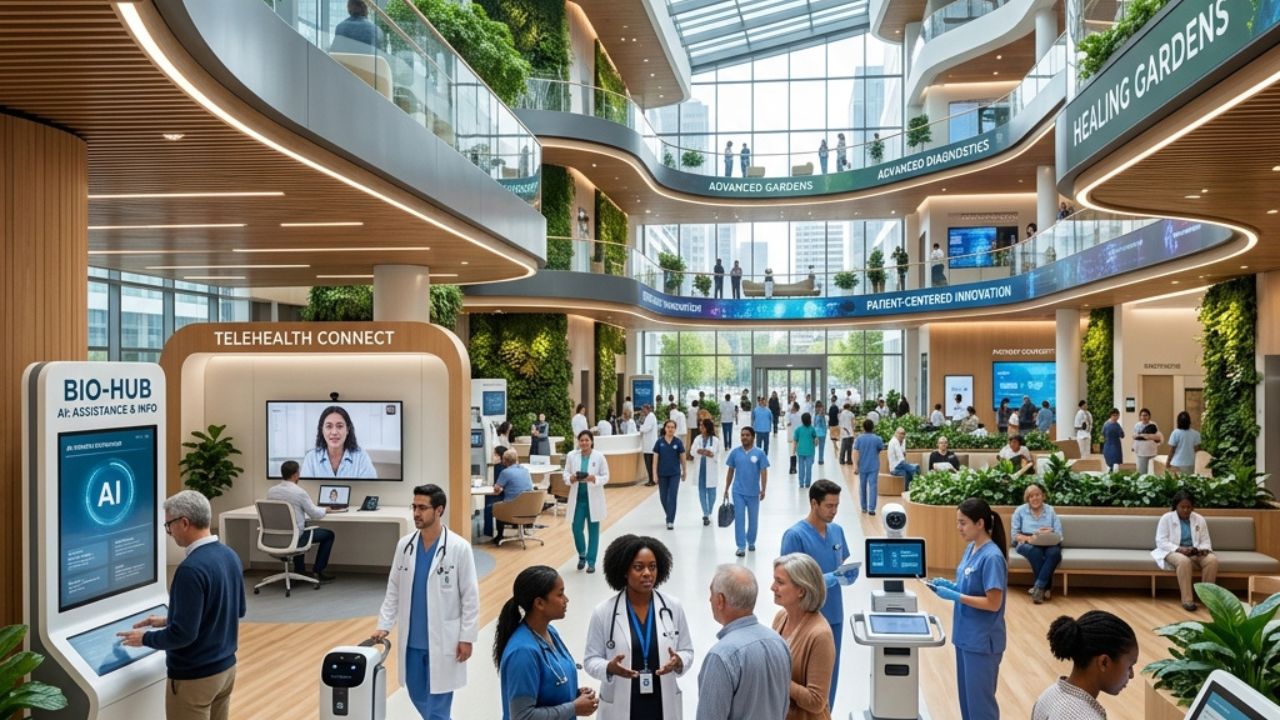
A small group of hospitals worldwide are redefining what modern healthcare looks like—through AI-powered diagnostics, robotic surgery, telemedicine, and deeply patient-centered care models. This post spotlights the institutions setting the standard, the innovations driving them, and what their progress means for the future of medicine.
What does it actually mean for a hospital to be “leading” healthcare? It goes beyond having the latest equipment or the most beds. The hospitals at the forefront of modern medicine are building systems that anticipate illness before symptoms appear, treat patients as partners in their own care, and integrate research directly into clinical practice.
Healthcare has never been under more pressure to evolve. An aging global population, the rise of chronic disease, and the growing complexity of medical technology have all pushed hospitals to rethink their models from the ground up. The institutions rising to that challenge share a common thread: a relentless commitment to innovation, not as a buzzword, but as an operational philosophy.
This post explores the key innovations reshaping hospital care, profiles three institutions that exemplify what forward-thinking healthcare looks like in practice, and examines the traits that separate leading hospitals from the rest. Whether you’re a patient making healthcare decisions, a clinician tracking industry trends, or a policy advocate, understanding what excellence looks like today matters.
How Hospital Care Has Transformed Over the Past Decade
A decade ago, most hospitals operated on largely reactive models—treat the patient in front of you, discharge them, repeat. The focus was on throughput. Quality was measured by complication rates and readmission numbers, not by how well a patient’s care was coordinated across their entire health journey.
That model has been dismantled—slowly, then rapidly.
The shift began with the widespread adoption of electronic health records (EHRs), which gave clinicians access to patient histories that had previously lived in paper folders across different departments and providers. From there, the integration of data analytics, machine learning, and remote monitoring tools accelerated what was possible.
Regulatory changes in the United States—particularly value-based care models introduced under the Affordable Care Act—incentivized hospitals to improve outcomes rather than simply increase volume. Similar shifts occurred in the UK’s NHS and across European health systems. Patients, too, began demanding more transparency, more access, and more individualized care.
The result is a healthcare landscape where the best hospitals are measured not just by survival rates, but by how effectively they prevent hospitalization in the first place.
Key Innovations Shaping Hospital Leadership Today
How are hospitals using artificial intelligence to improve patient outcomes?
AI and predictive analytics have moved from experimental to essential at leading institutions. Hospitals are now using machine learning models to flag patients at risk of sepsis hours before clinical deterioration becomes visible, to predict readmission risk at discharge, and to support radiologists in detecting early-stage cancers in imaging scans.
The impact is measurable. According to a 2023 report by McKinsey & Company, AI applications in clinical settings have the potential to reduce diagnostic errors by up to 40% in specific use cases, particularly in radiology and pathology.
What role does telemedicine play in modern hospital care?
Telemedicine shifted from a convenience feature to a care delivery backbone during the COVID-19 pandemic. Leading hospitals maintained it post-pandemic, integrating remote care into chronic disease management, post-surgical follow-up, and mental health services. Remote patient monitoring—wearable devices that transmit vitals directly to care teams—has extended the hospital’s reach into the home.
What surgical and procedural technologies are defining the next generation of care?
Robotic-assisted surgery platforms, such as the da Vinci Surgical System, have made minimally invasive procedures possible across specialties including urology, gynecology, and cardiac surgery. These technologies reduce patient recovery times, lower infection risk, and improve surgical precision. Advanced intraoperative imaging has further enhanced surgeons’ ability to operate with accuracy in high-stakes procedures.
How are hospitals using genomic data and personalized medicine?
Genomic testing allows hospitals to tailor treatment protocols to a patient’s genetic profile—particularly transformative in oncology, where tumor genomics can determine which chemotherapy regimen will be most effective. Hospitals at the leading edge are embedding genomic medicine into standard oncology workflows rather than treating it as a specialty service.
Hospital #1: Mayo Clinic — Pioneering Integrated Medicine
Mayo Clinic, headquartered in Rochester, Minnesota, consistently ranks among the world’s top hospitals. Its model is built on a team-based approach to care that dates back to its founding in the 19th century—but the execution of that model has never looked more cutting-edge.
Mayo’s Center for Connected Care has made telemedicine a core pillar of its care delivery, serving patients in rural and underserved communities who would otherwise lack access to its specialists. Its AI programs have produced clinically validated tools for detecting cardiac arrhythmias using standard ECG data—a development with implications for early intervention on a global scale.
In research, Mayo’s collaboration with the Department of Defense and National Institutes of Health has enabled large-scale studies in genomics and precision medicine. The clinic has received consistent recognition in U.S. News & World Report’s Best Hospitals rankings, placing first or near-first across multiple specialties for more than a decade.
Hospital #2: Cleveland Clinic — Excellence Through Research and Community Access
Cleveland Clinic has built its reputation on cardiovascular care, routinely ranking as the top heart care program in the United States according to U.S. News & World Report. But its scope extends well beyond cardiology.
The Clinic’s Lerner Research Institute drives clinical translation—turning laboratory discoveries into patient treatments at a pace that few hospitals can match. Its digital health program, launched with a significant investment in infrastructure, has enabled predictive risk scoring across its patient population, helping care teams intervene before high-risk patients reach a crisis point.
Cleveland Clinic has also made meaningful strides in health equity. Its community health programs target chronic disease prevention in underserved neighborhoods across Northeast Ohio, recognizing that a hospital’s responsibility doesn’t end at its front door. The institution’s global network—with locations in the UAE, Canada, and the UK—reflects its ambition to make its care model internationally accessible.
Hospital #3: Singapore General Hospital — A Model for Patient Safety and Workforce Excellence
Singapore General Hospital (SGH) is Southeast Asia’s largest acute tertiary hospital and a global benchmark for patient safety and operational efficiency. SGH has built one of the most sophisticated patient safety frameworks in the world, incorporating real-time incident monitoring, structured mortality reviews, and a culture that treats near-misses as learning opportunities rather than liabilities.
Staff development is central to SGH’s strategy. The hospital invests heavily in simulation training—allowing clinicians to practice high-stakes procedures in controlled environments before performing them on patients. This commitment extends to allied health professionals and nurses, not just physicians.
SGH’s vision for the future involves deeper integration with Singapore’s national health IT infrastructure, enabling seamless data sharing across the country’s public health system. Its work in smart hospital design—using sensor data to optimize patient flow and reduce wait times—has attracted international attention as a scalable model for healthcare efficiency.
What Do the Best Hospitals in the World Have in Common?
Looking across institutions like these, several defining traits emerge:
- A culture of continuous improvement: Leading hospitals treat every adverse outcome as data, not just a failure. They build systems to learn from what goes wrong and institutionalize those lessons.
- Heavy investment in technology and infrastructure: EHR integration, AI tools, and digital health platforms aren’t add-ons—they’re foundational to how care is delivered.
- Patient-centered design: From appointment scheduling to discharge planning, the patient’s experience is engineered, not incidental.
- Academic and research partnerships: Affiliation with universities and research institutions creates a pipeline from discovery to clinical application.
- Workforce retention strategies: The best hospitals know that clinical excellence is impossible without skilled, stable teams. They invest in training, culture, and compensation accordingly.
What Emerging Trends Are Hospitals Preparing For?
How will AI and robotics reshape hospital operations over the next decade?
Automation is already entering hospital logistics—robotic systems that dispense medication, transport supplies, and disinfect rooms are in use at leading institutions. The next frontier is clinical decision support that moves beyond flagging risk to actively recommending treatment adjustments in real time, with the clinician retaining final authority.
Why are mental health services becoming central to hospital care strategies?
The global mental health burden has forced hospitals to rethink care models that previously siloed psychiatric services. Integrated behavioral health—embedding mental health professionals within primary care and specialty teams—is now a strategic priority for hospitals that recognize the body-mind connection as clinically, not just philosophically, significant.
How are hospitals responding to sustainability pressures?
Healthcare is one of the world’s largest contributors to carbon emissions. Leading hospitals are investing in energy-efficient building design, reducing single-use plastics in clinical settings, and auditing supply chains for environmental impact. Practice Greenhealth, a U.S.-based organization, reports that healthcare systems that commit to sustainability initiatives also tend to see operational cost reductions over time.
The Hospitals That Will Define the Next Era of Medicine
The institutions profiled here don’t share a geography, a funding model, or a specialty focus. What they share is a refusal to treat the status quo as good enough.
Healthcare at its best is anticipatory, personalized, and deeply human—even when it’s powered by algorithms and robotic systems. The hospitals leading this work are demonstrating that technological sophistication and compassionate care aren’t competing values. Done well, they reinforce each other.
For patients, the most practical takeaway is this: when choosing a healthcare provider for complex or ongoing conditions, look beyond reputation alone. Ask how a hospital uses data to personalize your care, whether it has robust care coordination systems, and how it supports you between appointments—not just during them.
For those working in healthcare, these institutions offer a blueprint worth studying. Innovation at scale is possible. It requires investment, leadership, and a willingness to build systems that outlast the people who designed them.
Explore healthcare innovation in your area by visiting your regional hospital’s research and innovation pages, or consult resources like U.S. News & World Report’s Best Hospitals rankings, the WHO’s Global Health Observatory, and Practice Greenhealth for current data on healthcare performance and sustainability.
Frequently Asked Questions
What makes a hospital a leader in healthcare innovation?
Leading hospitals combine advanced technology adoption—such as AI diagnostics and robotic surgery—with strong research partnerships, patient-centered care models, and a culture of continuous improvement. Rankings from organizations like U.S. News & World Report and the WHO provide reliable benchmarks for evaluating hospital performance.
How is artificial intelligence currently being used in hospitals?
Hospitals are using AI for early disease detection in medical imaging, predicting patient deterioration (particularly sepsis risk), reducing readmissions, and personalizing treatment plans through genomic data analysis. According to McKinsey & Company (2023), AI has the potential to reduce diagnostic errors by up to 40% in specific clinical applications.
What is value-based care, and how does it affect hospital priorities?
Value-based care is a healthcare delivery model that ties provider reimbursement to patient health outcomes rather than the volume of services provided. It incentivizes hospitals to focus on prevention, care coordination, and long-term patient health—shifting priorities away from high throughput toward sustained clinical quality.
How do top hospitals approach health equity and community access?
Leading hospitals extend care beyond their physical facilities through telemedicine, community health programs, and partnerships with local organizations. Cleveland Clinic’s community health initiatives in underserved areas of Northeast Ohio are one example of a major institution treating health equity as a core strategic priority rather than a peripheral program.
What should patients consider when choosing a hospital for complex care?
Patients should look at specialty-specific outcomes data, the hospital’s use of coordinated care teams, its digital health capabilities (such as patient portals and telehealth access), and its track record on patient safety. Consulting independent rankings and accreditation bodies provides an additional layer of verification beyond the hospital’s own marketing.