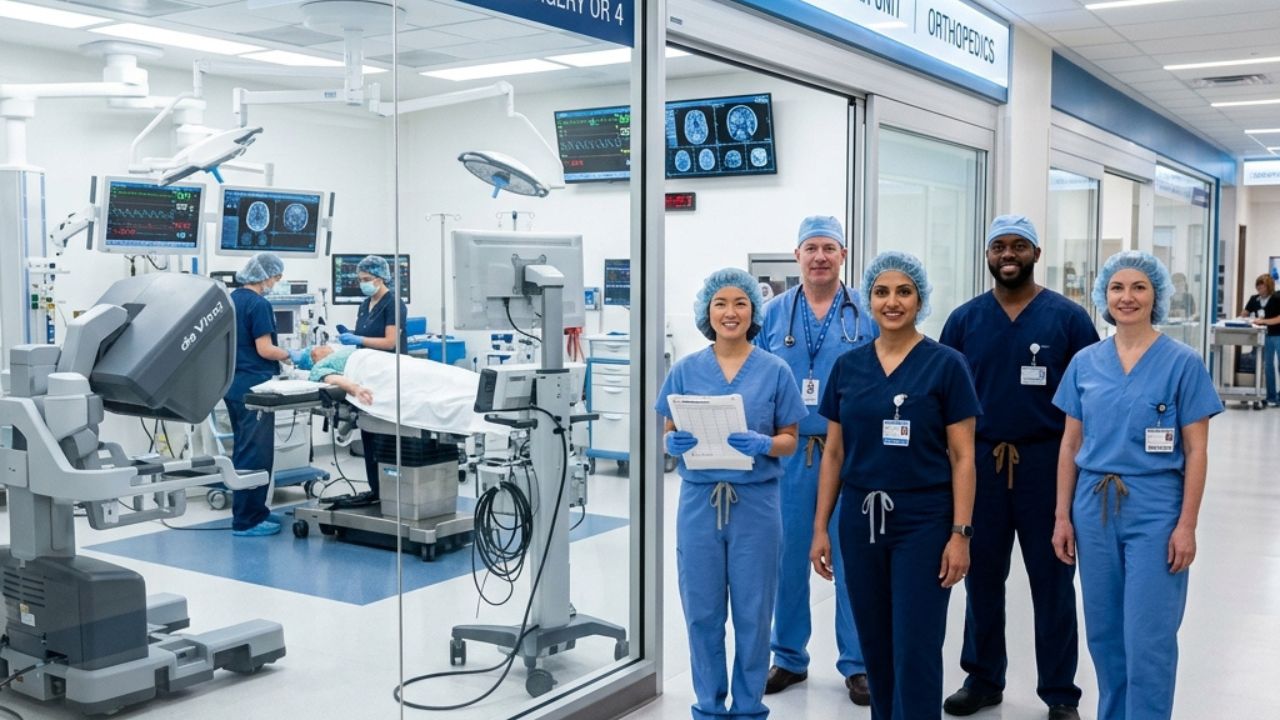
The best hospitals for complex surgeries in 2026 include Mayo Clinic, Cleveland Clinic, Johns Hopkins, MD Anderson Cancer Center, and Memorial Sloan Kettering. The right choice depends on your specific procedure, surgeon expertise, hospital accreditation, survival rates, and geographic accessibility.
Complex surgeries are a different category of medical care entirely. These are high-stakes procedures—open-heart surgery, brain tumor removal, organ transplants, spinal reconstruction—where the margin for error is razor-thin and the stakes couldn’t be higher. Unlike a routine appendectomy or a standard knee replacement, complex surgeries demand elite surgical teams, cutting-edge technology, and institutional experience built over decades.
Choosing the right hospital for a complex surgery isn’t just a logistical decision. Research consistently shows that outcomes vary significantly between facilities. A 2023 study published in the New England Journal of Medicine found that patients undergoing high-risk procedures at high-volume centers had substantially lower mortality rates compared to those treated at lower-volume hospitals. That gap matters enormously when you or someone you love is on the operating table.
This guide evaluates the top hospitals across America for complex surgeries in 2026. It covers the criteria used to assess each institution, breaks down leading hospitals by surgical specialty, and offers a regional overview to help you identify the best options near you. Finally, it outlines the practical factors you should weigh before making your decision.
What Makes a Hospital Truly Exceptional for Complex Surgeries?
Not all highly regarded hospitals are equally equipped for every type of complex surgery. Evaluation requires looking beyond reputation and rankings to assess several concrete factors.
Surgeon Expertise and Board Certifications
The surgeon performing your procedure is the single most important variable. Board-certified surgeons have met rigorous standards set by specialty boards such as the American Board of Surgery (ABS) or the American Board of Neurological Surgery (ABNS). Beyond certification, volume matters: surgeons who perform a given procedure frequently develop a level of precision that lower-volume counterparts simply cannot replicate.
Advanced Surgical Technology and Equipment
Top-tier hospitals invest heavily in technology. Robotic-assisted surgical systems like the da Vinci platform, intraoperative MRI suites, and hybrid operating rooms that combine imaging and surgery are no longer futuristic—they’re the baseline at leading centers. These tools reduce complication rates and accelerate recovery.
Patient Survival and Recovery Rates
Publicly reported outcome data, including 30-day mortality rates, complication rates, and length-of-stay statistics, offer a measurable snapshot of a hospital’s performance. The Centers for Medicare & Medicaid Services (CMS) publishes hospital compare data that can inform your research.
Hospital Accreditations and Quality Standards
Accreditation from organizations like The Joint Commission signals that a hospital meets nationally recognized performance and safety standards. Many specialty designations—such as being a Comprehensive Cancer Center designated by the National Cancer Institute (NCI) or a Blue Distinction Center for cardiac care—indicate verified excellence in specific surgical areas.
Patient Satisfaction and Support Services
Recovery extends beyond the operating room. Patient satisfaction scores, access to specialized nursing teams, rehabilitation services, mental health support, and care coordination all contribute to surgical outcomes and overall experience.
Top Hospitals by Surgical Specialty in 2026
Cardiovascular Surgery: Mayo Clinic, Cleveland Clinic, Johns Hopkins
Mayo Clinic (Rochester, MN) consistently earns the top spot in cardiovascular surgery. Its Heart and Vascular Center performs thousands of complex cardiac procedures annually, with outcomes that rank among the best in the country.
Cleveland Clinic (Cleveland, OH) has held the #1 ranking in heart care from U.S. News & World Report for 30 consecutive years as of 2024. Its surgical volume and breadth of cardiac programs—including heart transplants, valve repair, and aortic surgery—make it a national reference point.
Johns Hopkins Hospital (Baltimore, MD) rounds out the cardiovascular tier with particular strength in congenital heart surgery and minimally invasive cardiac procedures.
Neurosurgery: UC San Francisco Medical Center, Massachusetts General Hospital
UCSF Medical Center is a global leader in brain tumor surgery and stereotactic radiosurgery. Its neurosurgeons are internationally recognized for treating complex gliomas and other high-grade brain cancers with some of the most advanced technology available.
Massachusetts General Hospital (Boston, MA) offers one of the busiest neurosurgical programs in the country, with subspecialty expertise in cerebrovascular surgery, spinal disorders, and epilepsy surgery.
Orthopedic Surgery: Hospital for Special Surgery, Cedars-Sinai
Hospital for Special Surgery (HSS, New York, NY) has earned the #1 ranking in orthopedics from U.S. News & World Report for 14 consecutive years. HSS specializes exclusively in musculoskeletal care, making it the clear choice for complex joint reconstruction, spinal surgery, and sports medicine procedures.
Cedars-Sinai Medical Center (Los Angeles, CA) stands out on the West Coast for orthopedic surgery, offering comprehensive care for complex revision surgeries and spine disorders.
Transplant Surgery: UPMC, Stanford Health, UCLA Medical Center
UPMC (Pittsburgh, PA) is one of the largest transplant programs in the world, performing liver, kidney, heart, and lung transplants at exceptional volumes. Its transplant outcomes consistently exceed national benchmarks.
Stanford Health (Stanford, CA) brings together transplant surgery with world-class research capabilities, particularly in heart and lung transplantation.
UCLA Medical Center (Los Angeles, CA) operates one of the country’s busiest kidney and liver transplant programs, with strong outcomes data and a dedicated transplant support infrastructure.
Cancer Surgery: MD Anderson, Memorial Sloan Kettering, Dana-Farber
MD Anderson Cancer Center (Houston, TX) is the nation’s top-ranked cancer hospital according to U.S. News & World Report and is designated as an NCI Comprehensive Cancer Center. Its surgical oncology programs span every major cancer type, with particular strength in pancreatic, colorectal, and hepatobiliary surgery.
Memorial Sloan Kettering Cancer Center (New York, NY) offers surgical oncology expertise matched by few institutions globally, with subspecialists dedicated to individual cancer sites and minimally invasive techniques that shorten recovery times.
Dana-Farber Cancer Institute (Boston, MA) collaborates closely with Brigham and Women’s Hospital for surgical oncology, combining research excellence with clinical outcomes that attract patients from across the country.
Best Hospitals for Complex Surgery by Region
Northeast
The Northeast is home to some of the most concentrated surgical expertise in the country. Massachusetts General Hospital, Memorial Sloan Kettering, Johns Hopkins Hospital, Hospital for Special Surgery, and Dana-Farber Cancer Institute are all within this corridor. Yale New Haven Hospital and NYU Langone Health are also strong regional options for a range of complex procedures.
Southeast
In the Southeast, Duke University Medical Center (Durham, NC) and Vanderbilt University Medical Center (Nashville, TN) lead for complex surgical care. Both are academic medical centers with broad specialty programs. Emory University Hospital in Atlanta also stands out for transplant and cardiovascular surgery.
Midwest
Beyond Cleveland Clinic and Mayo Clinic, the Midwest offers strong options at Northwestern Memorial Hospital (Chicago, IL) for cardiovascular and cancer surgery, and University of Michigan Health (Ann Arbor, MI) for organ transplants and complex urological procedures.
Southwest
UT Southwestern Medical Center (Dallas, TX) is the premier surgical destination in the Southwest outside of Houston’s MD Anderson. Banner – University Medical Center in Phoenix, AZ provides strong orthopedic and cardiac surgical programs for patients across the region.
West Coast
Stanford Health, UCSF Medical Center, Cedars-Sinai, and UCLA Medical Center form a powerful West Coast cluster. Keck Medicine of USC (Los Angeles, CA) also merits mention for cancer surgery and organ transplantation.
What to Look for When Choosing a Hospital for Your Surgery
Rankings and specialty designations are a starting point, not a final answer. Here’s what to evaluate for your specific situation.
Track record with your specific procedure. A hospital’s general reputation doesn’t automatically translate to excellence in every procedure. Ask directly how many times the surgical team performs your procedure each year. Volume correlates strongly with outcomes for complex operations.
Surgeon experience and patient outcomes. Request outcome data for the individual surgeon performing your procedure, not just the hospital as a whole. Ask about complication rates, revision rates, and typical recovery timelines.
Hospital infection rates and safety metrics. Surgical site infections and hospital-acquired complications are preventable—and they vary significantly between facilities. CMS Hospital Compare and the Leapfrog Group publish hospital safety grades that are worth reviewing.
Insurance acceptance and financial assistance. Elite hospitals don’t always accept all insurance plans. Confirm in-network status early in your decision-making process. Most major medical centers also offer financial counseling and assistance programs for patients facing significant out-of-pocket costs.
Support services and patient resources. Complex surgeries come with complex recoveries. Look for hospitals that offer dedicated care coordinators, rehabilitation programs, nutrition counseling, mental health support, and clear lines of communication post-discharge.
Making the Right Choice for Your Complex Surgery
Selecting a hospital for a complex surgery is one of the most consequential decisions a patient and their family will make. The hospitals listed in this guide represent the pinnacle of American surgical care across multiple specialties, but the right institution for you depends on the specifics of your diagnosis, your location, your insurance, and the expertise required for your procedure.
Use this guide as a framework for focused research. Cross-reference hospital rankings from U.S. News & World Report, Leapfrog, and CMS Hospital Compare. Seek out patient reviews and outcome data specific to your procedure. Then consult with your primary care physician or specialist—they can offer a referral-level perspective that no ranking can fully replace.
The combination of data-driven research and personalized medical guidance gives you the best foundation for a decision this important.
Frequently Asked Questions
What is the #1 hospital in America for complex surgeries in 2026?
There is no single #1 hospital for all complex surgeries. Mayo Clinic and Cleveland Clinic consistently rank at the top across multiple specialties. However, the best hospital depends on the specific procedure—MD Anderson leads in cancer surgery, HSS in orthopedics, and UCSF in neurosurgery.
How do I find out if a hospital has good outcomes for my specific surgery?
Check publicly available data from the Centers for Medicare & Medicaid Services (CMS) Hospital Compare tool and the Leapfrog Group’s Hospital Safety Grade. You can also ask the hospital directly for procedure-specific complication rates and volume statistics.
Does hospital volume really affect surgical outcomes?
Yes. Research published in major medical journals, including the New England Journal of Medicine, consistently shows that higher surgical volume correlates with lower mortality and complication rates for complex procedures such as pancreatic surgery, cardiac surgery, and organ transplantation.
Should I travel to a top hospital for complex surgery?
If a highly specialized procedure is required and the outcomes data favors a center far from home, traveling can be worthwhile. Many top medical centers offer patient travel assistance programs, lodging support, and telehealth follow-up options to make the process manageable.
How do hospital accreditations help me evaluate surgical quality?
Accreditations from The Joint Commission, NCI Comprehensive Cancer Center designation, and specialty-specific certifications (such as Blue Distinction for cardiac care) confirm that a hospital has met verified national standards. They serve as a credible baseline indicator of institutional quality.